Case study · Sona · Concept · 2025

Sona

Designing the hour before sleep.

Most sleep products focus on sleep. Sona focuses on what happens before it — a concept exploring how a ceramic dock, scent compositions, an app, and a brand might help people transition out of the day and into rest.
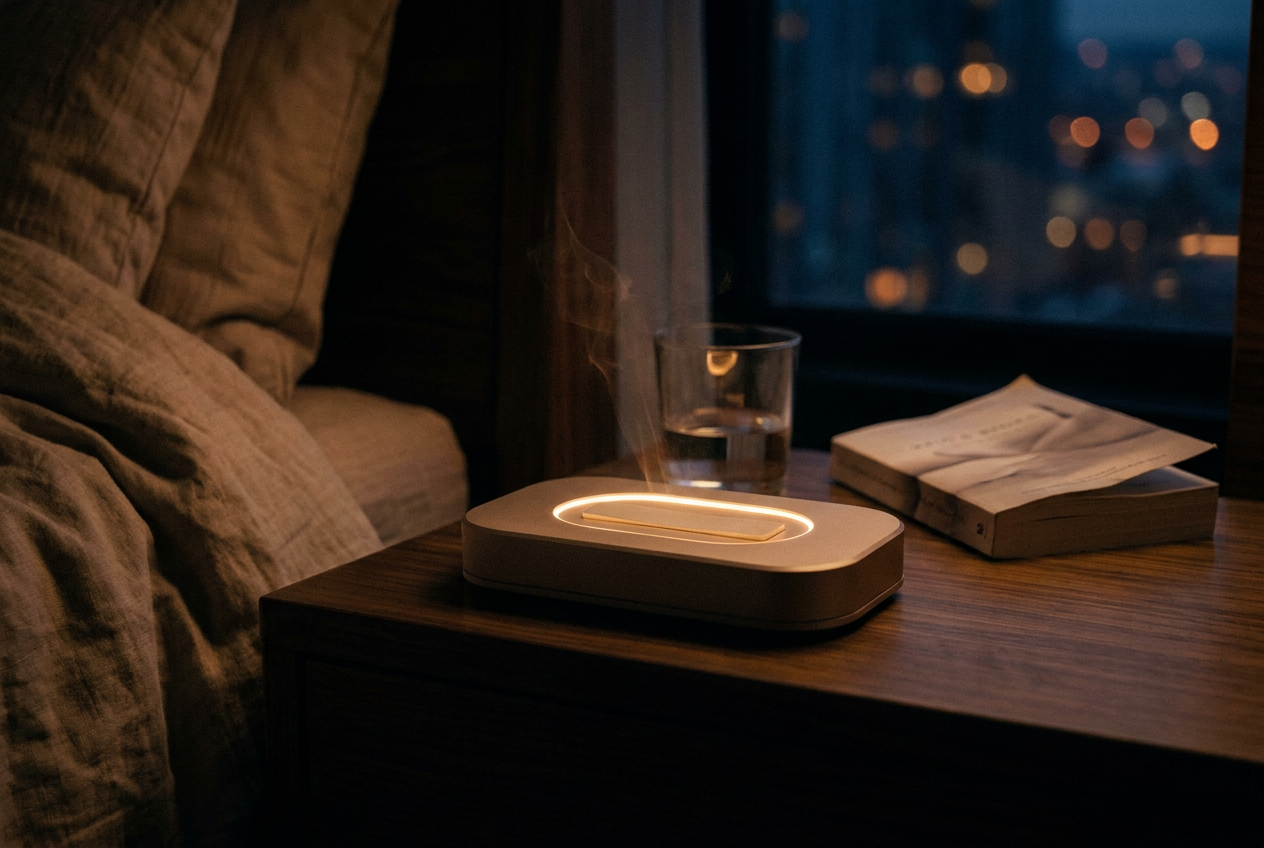
The Sona Ritual Dock on a bedside table in evening light — a glass of water and a paperback beside it, city lights blurred through the window
The Sona Ritual Dock on a bedside table in evening light.
RoleFuture-opportunity design — concept, product & ecosystem vision, art direction
TypeSpeculative concept
Duration4 weeks
FocusBehaviour · systems · ritual design
01.What this demonstrates

Four competencies on display.

01Strategic foresightReading a behavioural shift before the market names it — the problem is the transition out of the day, not sleep itself.
02Opportunity designIdentifying an unowned space and defining the category that should fill it, rather than answering an existing brief.
03Ecosystem thinkingFour parts — object, scent, app, brand — designed to hand off across one experience, not a product with accessories.
04Behavioural insightDesigning for how people actually disengage, and refusing the tracking paradigm that makes the problem worse.
02.Why I pursued this project

A brief I chose, to ask a bigger question.

Most of my work is commercial and tightly constrained — products built to ship and sell against a cost and a calendar. I took on this speculative brief deliberately, to work the muscle that day-to-day product work rarely asks for: starting from a behaviour rather than a brief, and designing a whole ecosystem rather than a single object.

The brief set the territory — a sleep and mindfulness ritual for urban professionals who'd tried everything and distrusted brands that over-promise — and asked for a product, an app, and a campaign. I used it to answer a larger question: if I could define a category from scratch, what would I choose to build, and what would I refuse to?

03.The opportunity

A market pointed at the wrong moment.

The sleep market is crowded, but it is almost entirely pointed at the wrong moment. Trackers, scores, and smart mattresses measure sleep once you're in it; supplements and teas treat the body. Almost nothing is designed for the hour before — the transition out of a stimulated day, which is where most people actually get stuck.

That gap is widening. Evenings have filled with screens engineered to hold attention, and the dominant “solution” — a sleep app on the same phone causing the problem — competes with the distraction instead of ending it. The underserved user isn't the person who can't sleep. It's the person who can't stop. That's an unowned category, and the bet behind Sona is that it's the one worth defining.

04.The foresight

Three bets about behaviour.

Before any form, I made three bets about how people actually relate to the end of the day — and pressure-tested each one: against my own reasoning, and in unstructured conversations with people I trusted to push back.

01Sleep isn't the problem. Transition is.The evening has filled with stimulation. The hard part may not be sleeping — it’s stopping.What if we designed the transition itself, not the sleep?
02Awareness doesn't change behaviour.People already know the habits. Knowledge isn't the barrier — starting is.What if the goal was to make the right move easier to begin?
03A physical ritual beats a digital reminder.Most sleep tools live inside the device causing the distraction. Objects occupy space and signal intent.Could an object help people disengage better than another screen?
05.Key design decisions

How I arrived at the ecosystem.

01Why physical, not an app alone?A screen competes with the very distraction it's meant to end. A physical object occupies space and signals intent — a reminder by existing, not by interrupting.
02Why scent?A cue that works without attention or a screen. Smell ties to memory and mood faster than an interface can, so it carries the ritual while the phone goes away.
03Why a dock, not a wearable or candle?A ritual needs a fixed place to repeat. A wearable blurs into the day; a candle has no system behind it. A dock gives the evening a spot to return to — and place is what makes a habit stick.
06.The strategic decision

No sensors. No scores. No streaks.

The first idea was a quiet record of restful nights. I dropped it before building it. The moment Sona scored your sleep, it would become the thing it was meant to replace — another metric to optimise, another reason to reach for the phone, another way to fail at rest.

So the founding decision was a refusal. In a category whose entire logic is measurement, choosing not to measure is the strategic bet — it's what makes Sona a different proposition rather than a softer-looking tracker. Everything else follows from that one line: the dock has no screen, the app has one job a night and then disappears, and the only thing Sona keeps is a plain record it draws no conclusions from.

The discipline wasn’t designing more. It was identifying what the category does by reflex — and deciding to do the opposite on purpose.

07.Positioning

I set the world before the object.

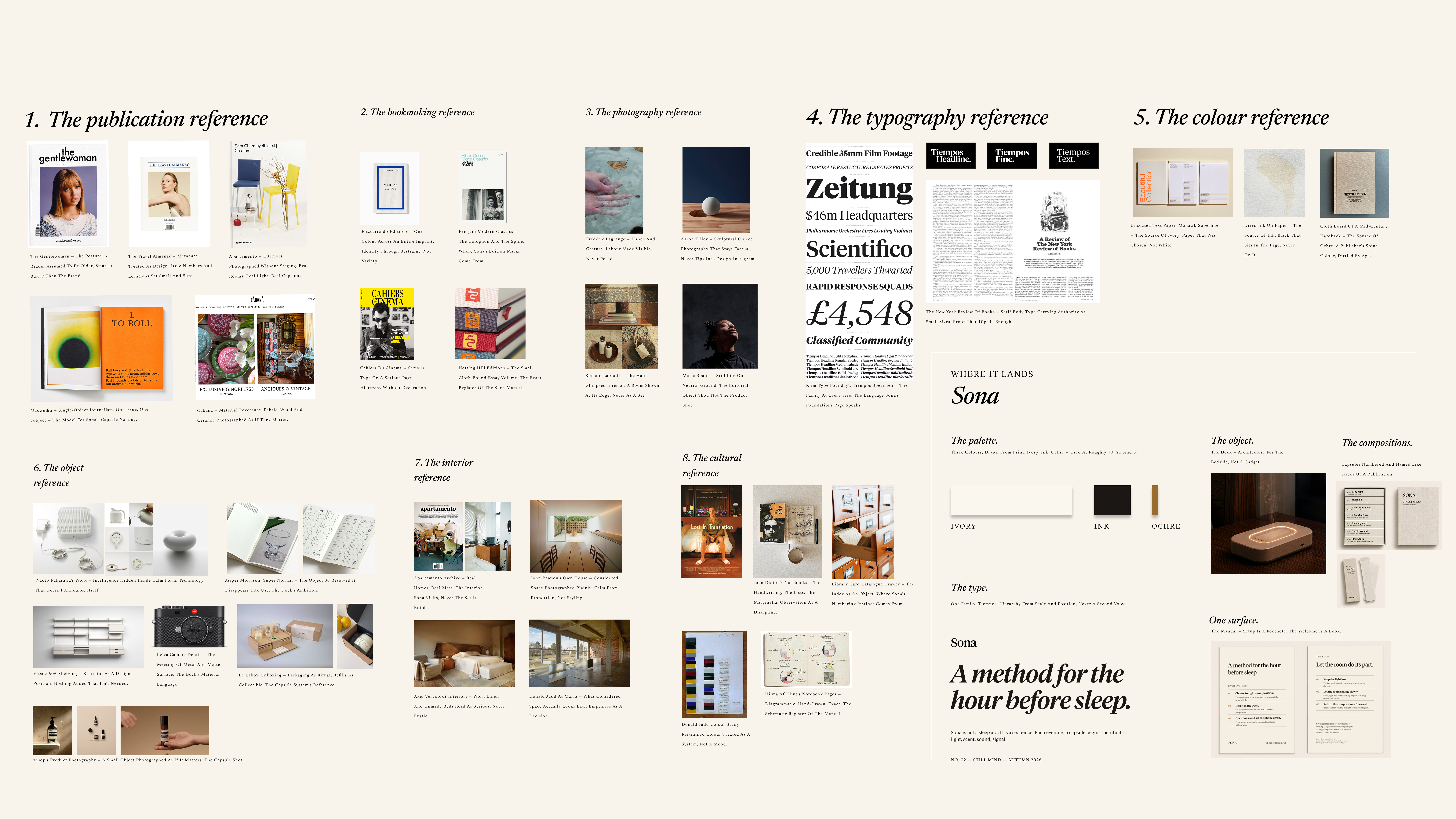
Before drawing a single form, I decided what Sona was not: not a gadget, not a wellness app, not aromatherapy. I built its world from publishing, bookmaking, photography, and type — editorial, restrained, exact — and the palette of ivory, ink, and ochre, the type, and the tone all came from here.

Eight-up reference grid — publication, bookmaking, photography, typography, colour, object, interior and cultural references, with a panel showing where Sona lands

Reference imagery sourced and credited; the synthesis and direction are mine.

08.The ecosystem

Four parts that hand off across the evening.

Sona isn't a single product, and it isn't a system in the operational sense — it's an ecosystem of four parts — dock, compositions, app, and brand — each owning a moment and passing to the next. I mapped the transition into five stages and gave each part a stage to hold, then hand on.

01ArriveThe day ends. The phone is still in hand.The moment before
02ChooseA composition sets the intent for the evening.App + Compositions
03BeginThe paper goes on the Dock; light and scent start.Dock
04ReleaseThe phone goes down; the room takes over.Dock + Brand
05RestReading, stillness — sleep arrived at, not chased.The room
09.The solution · Dock

A domestic object, not a gadget.

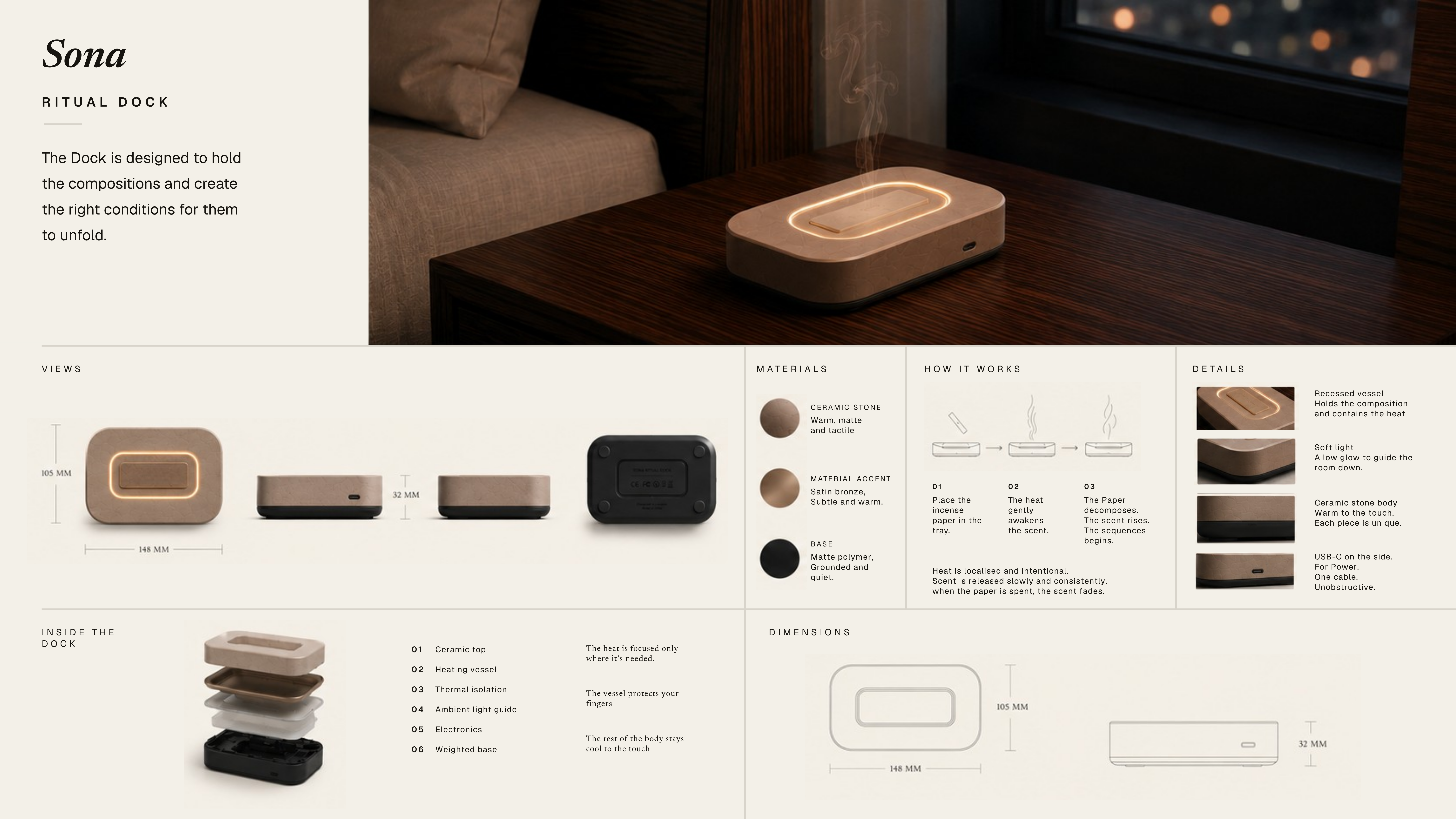
The hard part was resisting the obvious — a sleek tech device. A device asks to be operated; an object simply sits there and signals intent. So the dock reads as ceramic stone, warm and matte — something you'd own, not tend to — and disappears into the room, so the ritual, not the technology, is what the evening returns to.

Sona Ritual Dock specification panel — bedside hero render, orthographic views at 148 by 105 by 32 mm, ceramic-stone and satin-bronze materials, the heat-and-scent sequence, an exploded internal build, and detail callouts
Sona Ritual Dock specification panel — bedside hero render, orthographic views at 148 by 105 by 32 mm, ceramic-stone and satin-bronze materials, the heat-and-scent sequence, an exploded internal build, and detail callouts.
10.The solution · Compositions

Packaged like a publication, not a supplement.

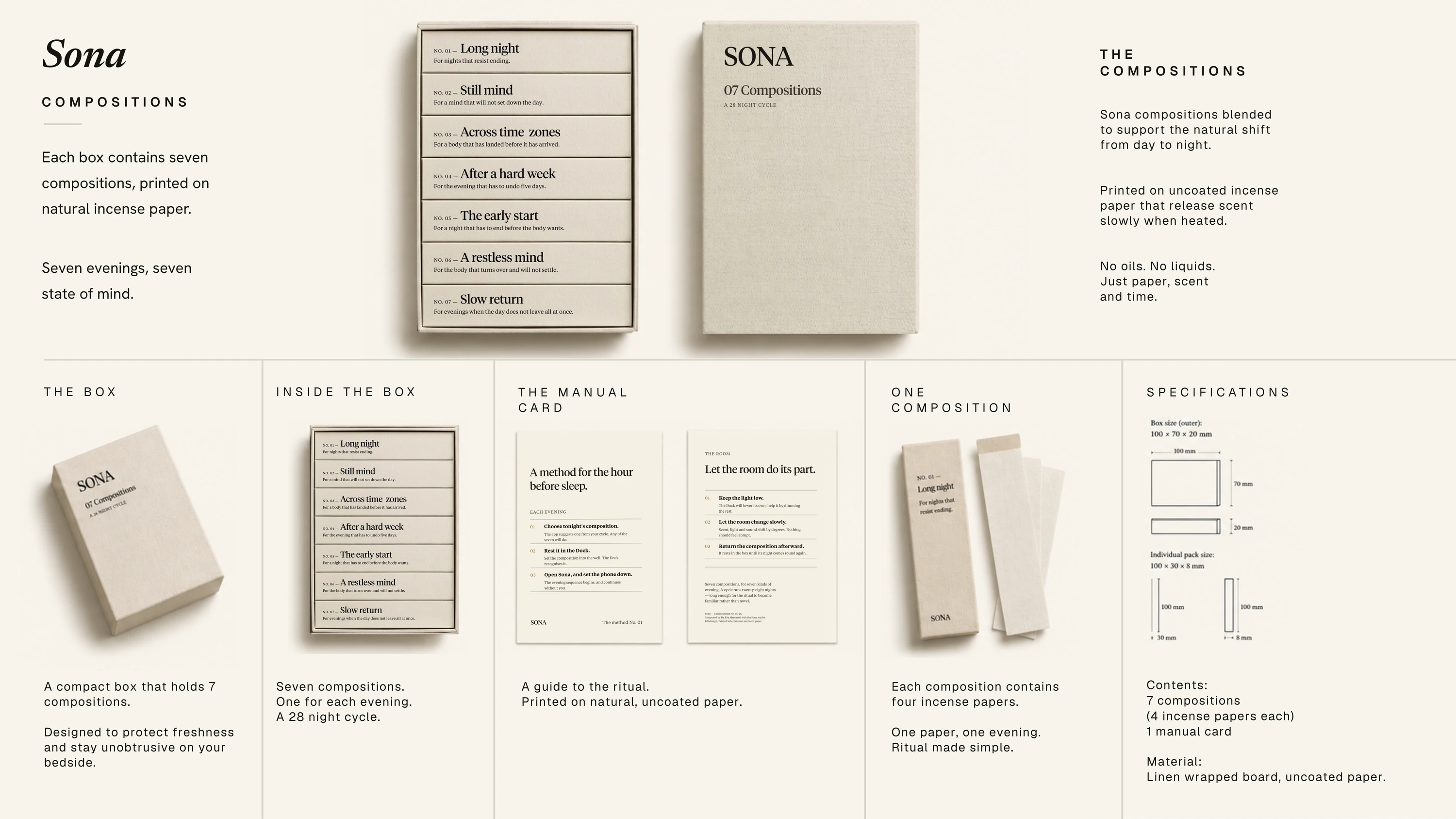
I started with fragrance capsules and oils, and rejected both — each instantly recast Sona as a supplement or an aromatherapy product. The answer was incense papers in a linen-wrapped box, indexed like a small publication: no oils, no liquids, just paper, scent, and time.

Sona compositions and packaging panel — the seven-composition index, the linen-wrapped box, inside the box, the manual card, one composition with its incense papers, and full specifications
Sona compositions and packaging panel — the seven-composition index, the linen-wrapped box, inside the box, the manual card, one composition with its incense papers, and full specifications.
11.Experience journey · the app

One flow, then the phone goes down.

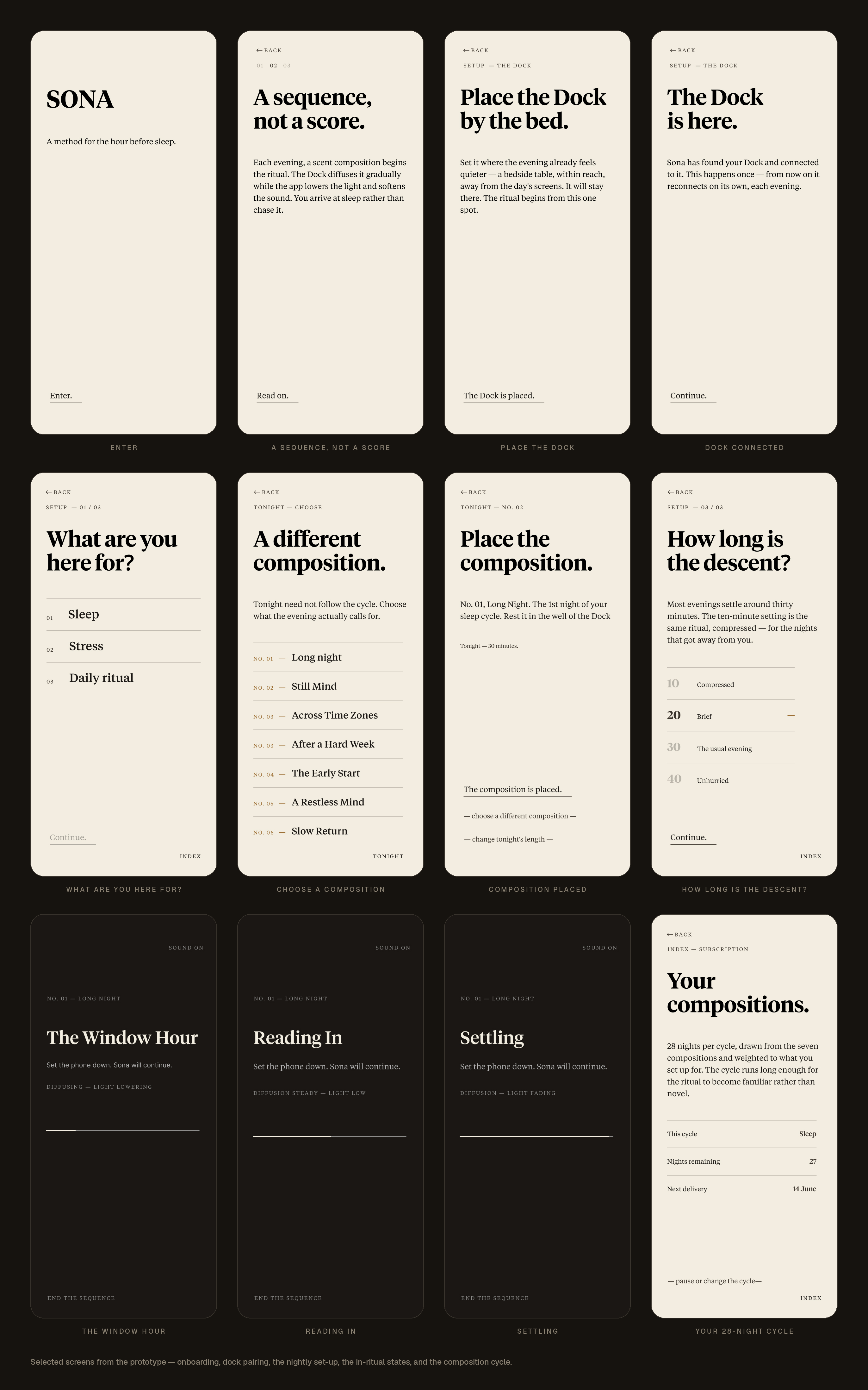
The brief asked for a companion app; the design problem was making it the kind you open once a night and then forget. A single job each evening — set the ritual, then disappear — ending in a screen that simply says: set the phone down, Sona will continue.

01OpenOpen Sona — it finds the Dock and picks up the ritual. No sign-up, no feed, no notifications.
02SetSet what the evening is for, choose tonight's composition, and set the length of the descent.
03BeginPlace the incense paper in the Dock's vessel; the Dock recognises it and begins.
04ReleaseSet the phone down. The ritual screen dims to the room and the sequence continues without you.
Twelve screens from the Sona app prototype across three rows — onboarding and the case for a sequence not a score, dock pairing and set-up, the nightly intent and descent choices, the dark in-ritual states, and the 28-night composition cycle
Twelve screens from the Sona app prototype across three rows — onboarding and the case for a sequence not a score, dock pairing and set-up, the nightly intent and descent choices, the dark in-ritual states, and the 28-night composition cycle.
12.Working prototype

Click through the ritual.

Beyond static screens, I built Sona's nightly flow as an interactive prototype — onboarding, set-up, and the ritual itself, click by click.

Interactive prototype

The nightly flow, end to end.

Best viewed on desktop. Set in Source Serif 4 — a freely-available stand-in for Tiempos, the paid font specified in the design but unavailable in the AI-assisted prototyping environment.

Open prototype →
13.Brand & campaign

An editorial voice for calm.

The brief called for a launch campaign, so the identity had to carry beyond the product — unhurried, exact, closer to a publication than a brand, selling a feeling rather than a feature. I set it against four tensions:

Calm, not passivePremium, not exclusiveRitual, not spiritualContemporary, not clinical
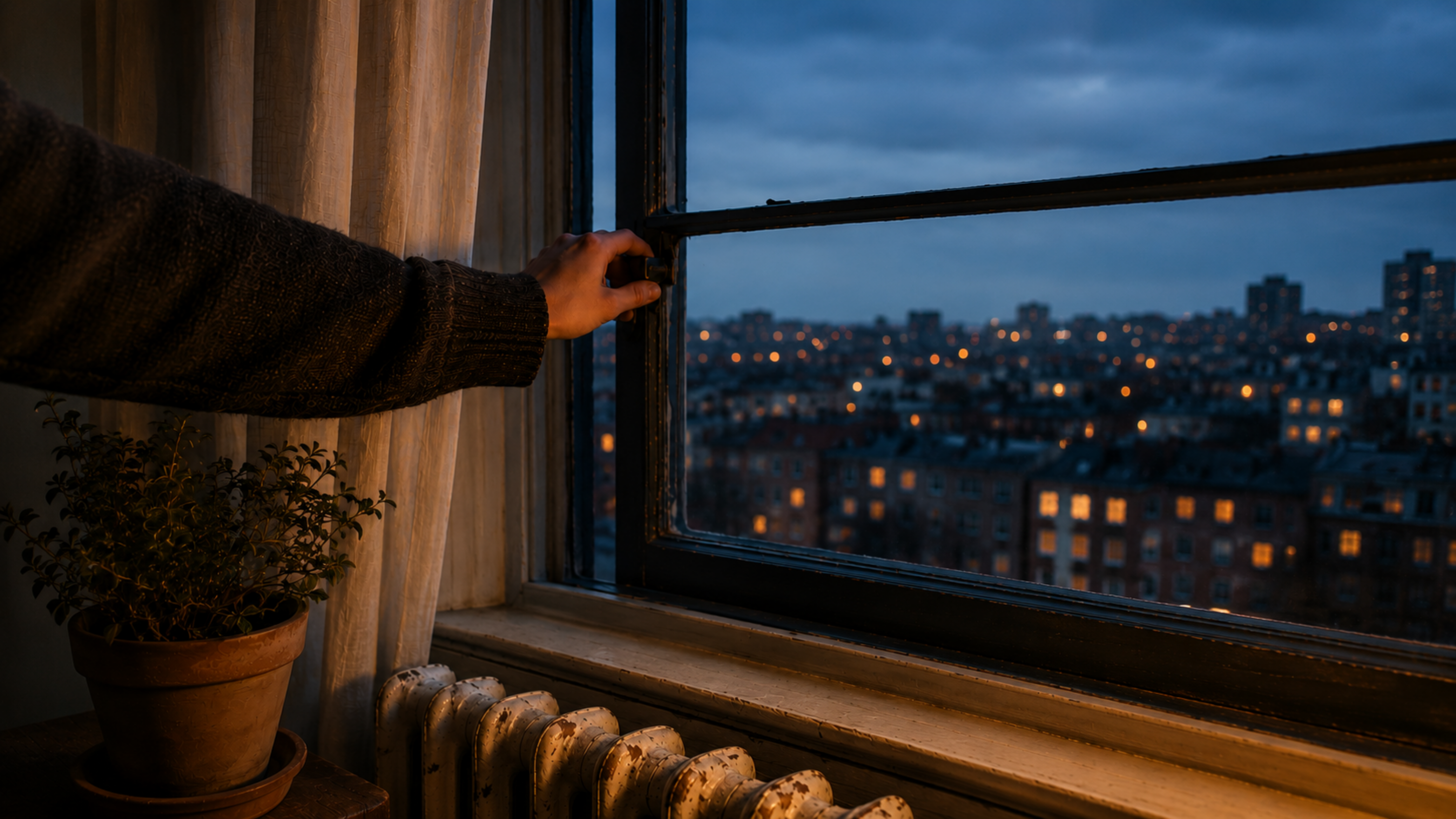
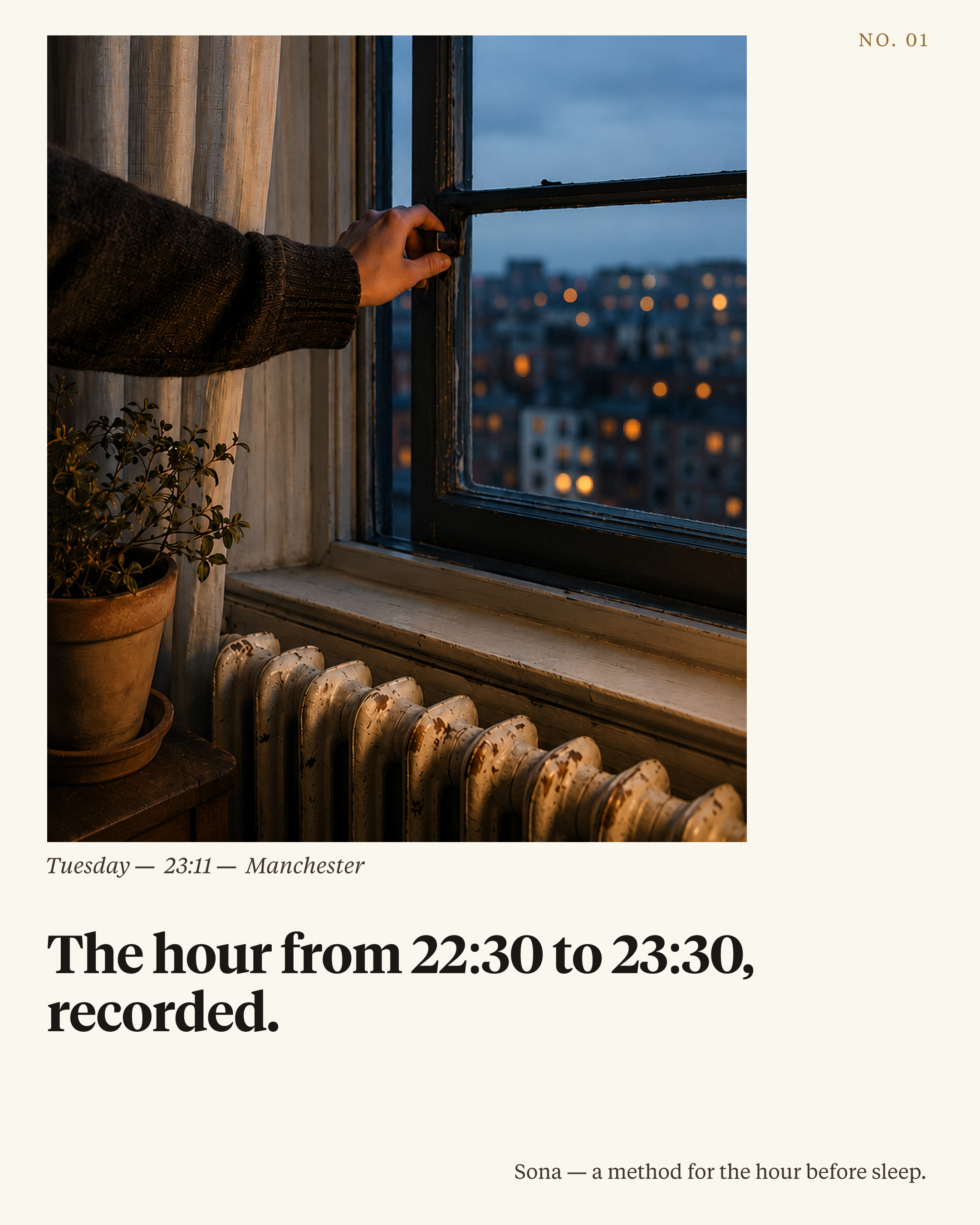
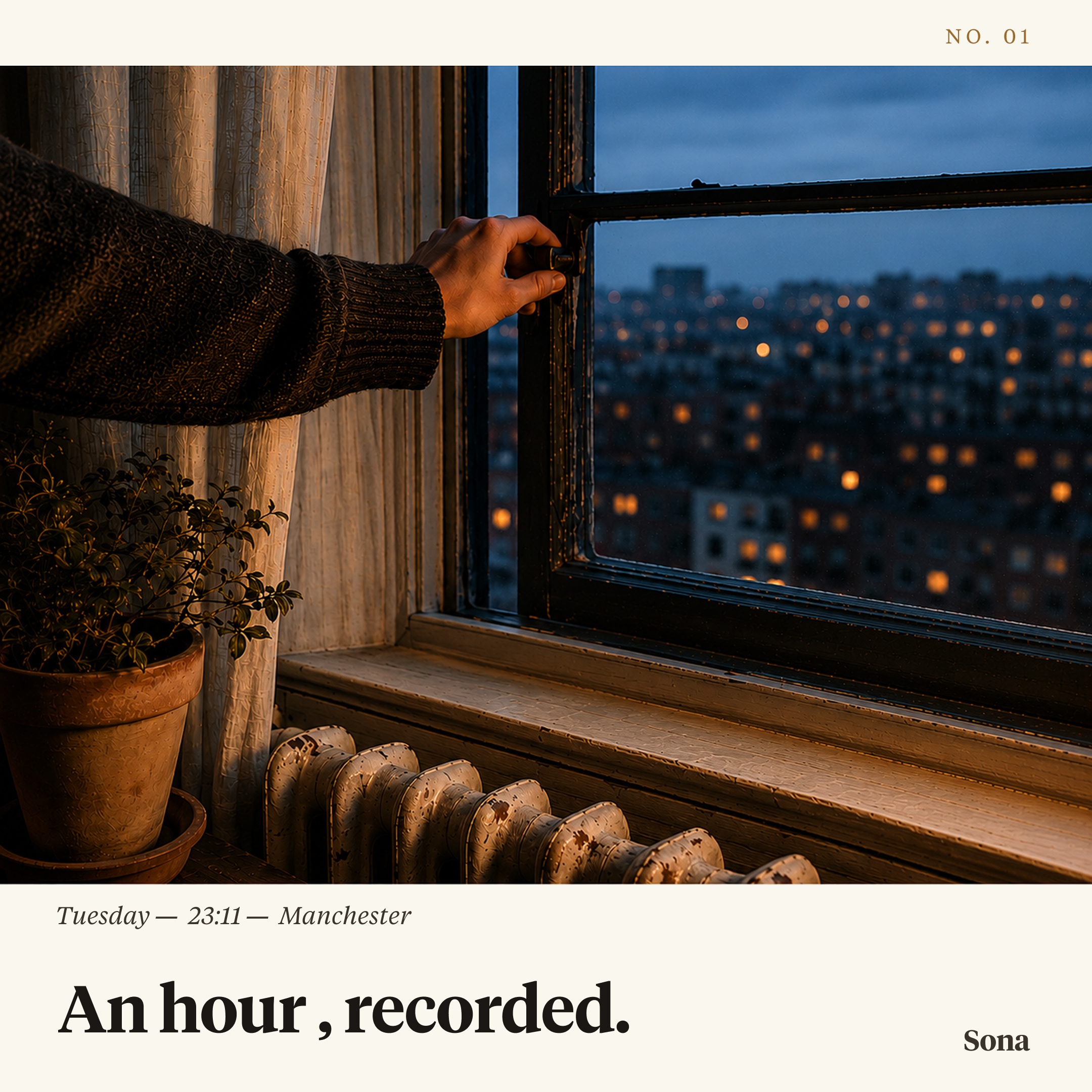
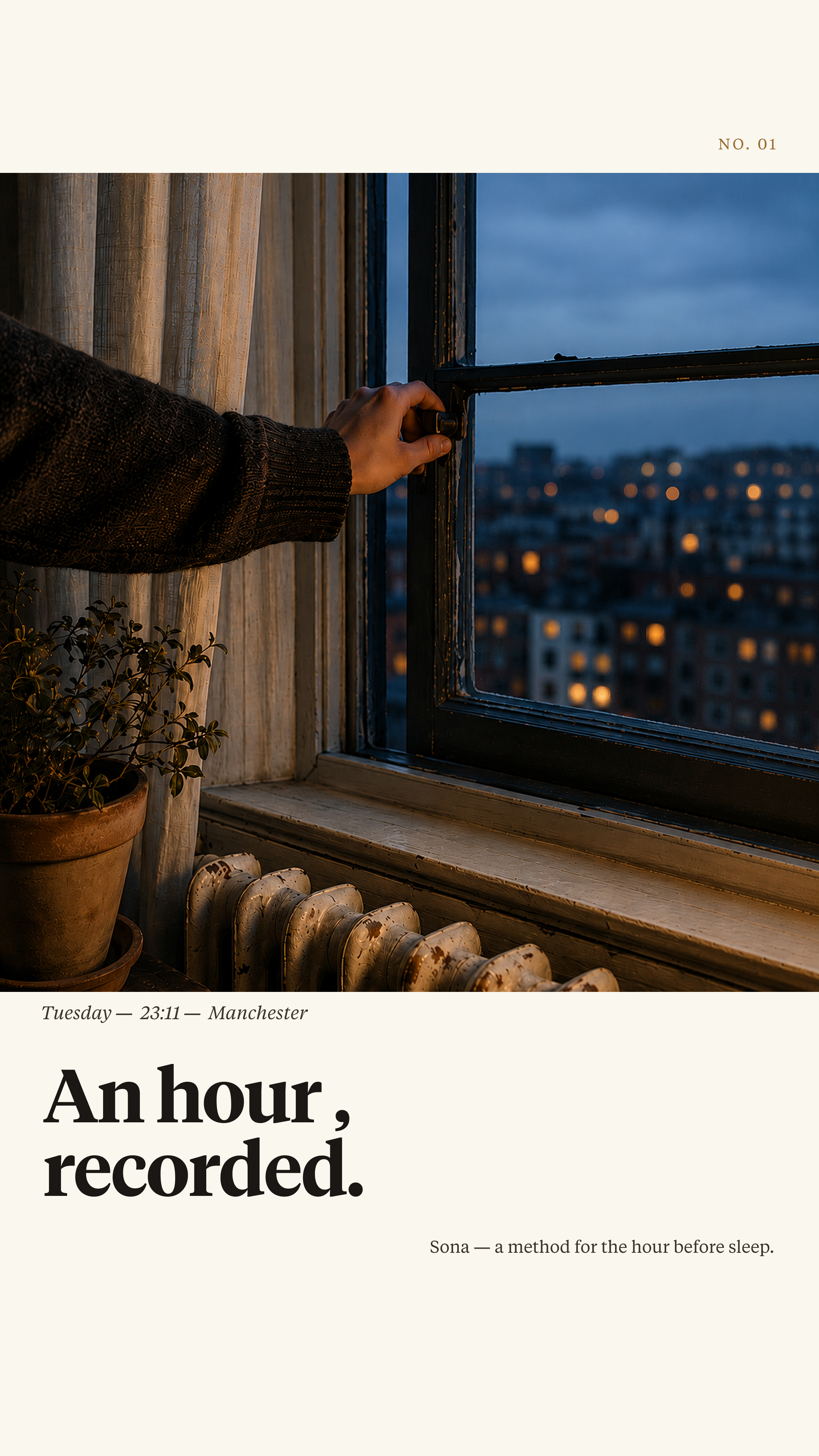
Sona launch campaign banner — a hand drawing back a curtain at dusk over a city skyline, captioned “the hour recorded.”
Sona campaign — social feed post, 4:5
Sona campaign — square social post, 1:1
Sona campaign — Instagram story and reel cover, 9:16

Campaign across formats — web banner, feed, square, and story.

14.Reflection

What this approach unlocks.

Sona is a concept, not a validated product, and I'd treat it that way: before building anything, I'd test the core bet — does designing the transition actually beat optimising the sleep? — small and qualitative, in real bedrooms. The commercial questions, refill economics and retention, are what I'd model before it became a product, not after.

But the part that travels isn't the dock or the scent. It's the method: start from a behaviour the market has misread, identify the moment everyone else is designing around, and decide what to refuse before deciding what to build. That approach isn't specific to sleep. It's how I'd come at any category where the obvious products are all solving the wrong half of the problem — which is most of the categories worth entering.

Genie was a category rebuilt. Phoenix was a product made to punch above its cost. Sona is the one where I got to ask the earlier question: not how to make the thing better, but whether the category is even pointed at the right need.

15.Role & scope

What I made.

Sole designer, end to end: problem framing, concept and form development, CMF, app UI and flows, brand identity and visual system, packaging, and launch campaign — brought together as an interactive prototype.

Designed over four weeks from a brief set in a design certification (Job Escape). The concept, product direction and ecosystem vision are mine. I worked with AI tools through the process — to explore research directions and to build the visualisation and art direction — directing the calls throughout.

Return toSelected work

Three projects — five years of building consumer products end to end. Genie, Phoenix, Sona.

Connect

Hiring or curious —
hello@toobaameer.co.uk

UK · FULL RIGHT TO WORK · ONSITE OR HYBRID UK-WIDE · REMOTE WORLDWIDE · DESIGN MANAGER / LEAD PRODUCT DESIGNER